
Gridlock: Powering affordable and sustainable grid expansion
Gridlock helps utilities plan infrastructure investment to optimize total system costs and carbon emissions.
01 / The challenge
Energy growth is outpacing the speed of planning and expanding the grid.
Grid context
of nearly flat U.S. electricity demand before the recent surgeEfficiency gains helped offset growth.
indicative planning and build timeline for generation and transmission projectsVaries by asset, location and permitting.
New demand
forecast U.S. electricity demand growth through 2030IEA forecast for 2026–2030.
indicative construction timeline for a large-scale data centerGrid connection can take longer.
Energy growth is outpacing the speed of planning and expanding the grid.
02 / Gridlock’s focus
Capital recommendations for system cost and carbon targets
The tool under development uses large-load and generation project pipelines to compare combinations of generation, storage and transmission investment. The goal is to optimize system cost within carbon targets and modeled reliability constraints.
Large-load and generation pipelines
Inputs include project pipelines, demand scenarios and the existing grid.
Optimize capital investment plans
Compare investment choices for system costs and emissions across demand scenarios.
Capital recommendations
Combinations of generation, storage and transmission investment, with capacity, location, timing and cost estimates.
Preview capital plans before project-specific, detailed engineering. Engineers then validate feasibility, scope and cost.
Accelerate scenario analysis
Compare credible investment options sooner, and see how the plan changes under different demand scenarios.
Support financial and regulatory review
Show costs, emissions and timing trade-offs clearly for financial planning and regulatory review.


03 / Early discovery
Shaped by utility planning needs.
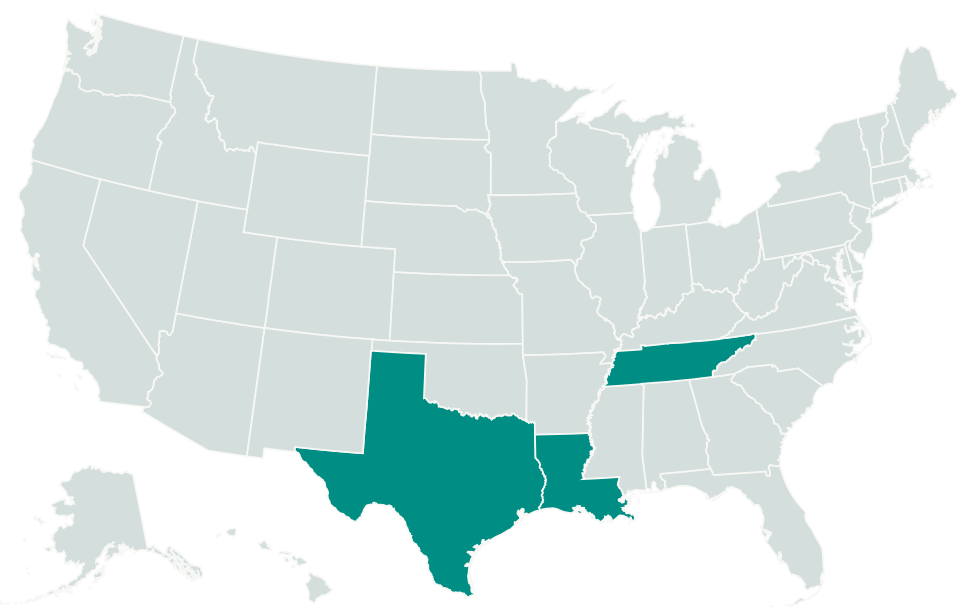
Customer conversations in three utility service areas have confirmed the capital-planning pain point.
04 / The founder

Sophia Yan
MIT Sloan MBA ’28
Former McKinsey Global Energy Practice
- Analyzed and optimized $24B+ in utility capital projects.
- Researched AI compute and energy infrastructure.
05 / Build with me
Where would you like to contribute?
Help sharpen the problem, build the prototype, or simply exchange ideas. Choose what interests you and introduce yourself.
Sources and assumptions
- Nearly flat demand: EIA describes U.S. electricity consumption as having been largely unchanged for roughly 15 years before the recent growth cycle. Efficiency was one contributor. EIA Annual Energy Outlook.
- Demand growth: IEA forecasts U.S. electricity demand growth of around 2% annually over 2026–2030. IEA Electricity 2026 — Demand.
- Infrastructure timing: The slide uses indicative planning assumptions of 4–8 years for generation and transmission projects and 1.5–3 years for large-scale data-center construction. These are not measured industry-wide averages. The IEA benchmark is narrower: 4–8 years for new transmission in advanced economies and 2–3 years for data centers to become operational. Timing varies by project, and construction completion does not necessarily mean grid connection is ready. IEA Energy and AI — Executive summary; Energy demand from AI.
- Product and founder: Sophia Yan’s updated Pitch2Match slide, October 27, 2026, and MIT Sandbox application. The $24B+ project figure is founder-reported. The described workflow is the intended prototype, not a claim of a validated production system. About GenX.
- Discovery and collaboration: Founder-reported customer discovery across three utility service areas. State map uses US Atlas geographic boundaries. Proposed collaboration dates are November 2026–February 2027 and December 2026–May 2027.